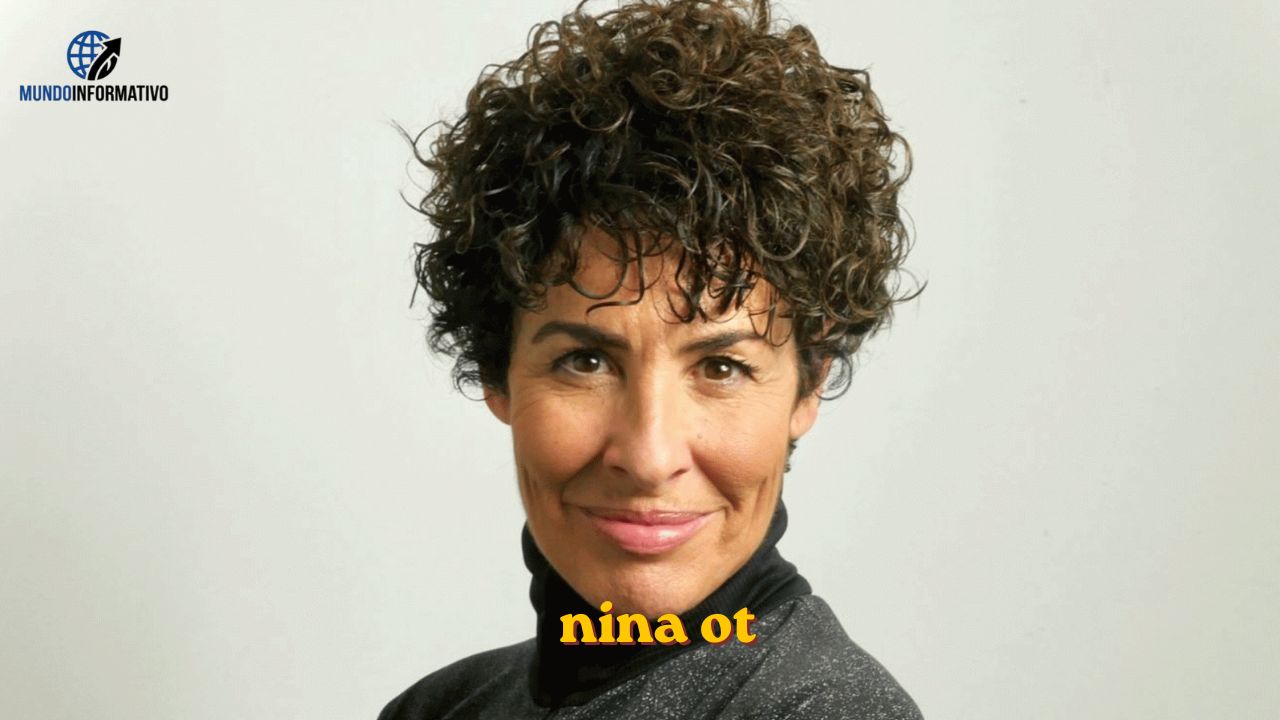
For many viewers, searching for Nina OT begins with a simple question: who was the woman at the center of the original Operación Triunfo academy, and what happened to her after the show became a television phenomenon? Nina, whose real name is Anna María Agustí Flores, was far more than a television mentor. She was an established singer and actress before Operación Triunfo made her one of Spain’s most recognizable television figures.
Her career included Eurovision, television, music education and musical theatre, giving her a professional background that helped explain why she approached young performers differently from a conventional TV personality. She directed the Operación Triunfo academy during its formative years and later returned to the franchise as a judge in 2020.
This article explains Nina’s career, her connection with OT, her work after the show’s early seasons, her relationship with the contestants and what makes her legacy in Spanish entertainment distinctive.
Who Is Nina From OT?
Nina is the professional name of Anna María Agustí Flores, a Catalan singer, actress, vocal educator and television personality.
Although many people discovered her through Operación Triunfo, she was already an experienced performer before the programme premiered in 2001. Her early television career included an appearance as an assistant on Un, dos, tres… responda otra vez, and in 1989 she represented Spain at the Eurovision Song Contest with “Nacida para amar,” finishing sixth.
That background matters when understanding Nina’s role at OT. She was not simply selected because she could present well on television. She had first-hand experience of professional performance, competition, stage pressure and the demands placed on singers.
Nina and Operación Triunfo
Nina became the director of the Operación Triunfo academy when the programme launched in 2001.
The first season became a major television success and introduced audiences to performers including David Bisbal, Rosa López and David Bustamante. Nina became an important adult presence within the academy, helping contestants deal with the technical and emotional demands of intensive musical training.
She remained associated with the academy through the early editions and later returned to the format in other capacities.
Her relationship with OT can be divided into several stages:
- 2001–2003: Director of the academy during the show’s first three editions.
- 2011: Returned to Operación Triunfo as director and teacher.
- 2016: Participated in OT: El Reencuentro.
- 2020: Returned as a member of the judging panel.
This long association is one reason Nina remains strongly connected with the identity of the original OT.
What Made Nina’s Role Different?
One of the most interesting aspects of Nina’s work was that she approached contestants from the perspective of a performer and teacher rather than simply a television judge.
When she returned as a judge in 2020, she explained that she wanted to concentrate on the technical side of performances and provide contestants with tools to improve rather than merely saying whether she personally liked an act.
That distinction is important.
A singer can deliver a performance that a particular viewer dislikes while still demonstrating strong technique. Conversely, a performance can be entertaining but contain problems with pitch, breathing, phrasing or stage control.
Nina’s professional experience allowed her to evaluate those elements.
What Did Nina Teach OT Contestants?
Her approach was closely connected with the practical realities of being a performer.
A singer working under pressure needs more than a good voice. They also need:
- Breath control
- Reliable pitch
- Stage confidence
- Physical awareness
- Interpretation
- Microphone technique
- The ability to recover from mistakes
- Consistency from rehearsal to live performance
This is one reason her presence at the academy had a different character from the celebrity-driven side of the programme.
Nina’s Career Before OT
The easiest way to misunderstand Nina is to treat Operación Triunfo as the beginning of her career.
It was actually a major turning point in her public visibility, but not the start of her professional life.
She had already appeared on television and represented Spain at Eurovision. Her Eurovision appearance came in 1989, when she performed “Nacida para amar” and finished sixth.
The Eurovision experience also illustrates something important about Nina: she understood the difference between being a singer and being a television contestant.
Eurovision places enormous pressure on a performer because the singer has to communicate through a single high-profile performance. Operación Triunfo presented a different challenge: contestants were being observed and evaluated repeatedly while living and training within an intense environment.
Nina had experienced enough of the professional world to understand both sides.
Nina’s Musical Theatre Career
After her most visible period on television, Nina increasingly concentrated on musical theatre.
This became one of the most important parts of her career.
She played Donna in Mamma Mia! for several years, including a long run from 2004 to 2010 and another return in 2017. She also worked in productions including Cabaret and Casi normales.
Her work in musical theatre helps explain why Nina’s career should not be measured only by television appearances.
Television can make someone famous quickly, but theatre requires sustained technical ability. Performers have to repeat demanding material night after night while maintaining vocal and physical consistency.
For Nina, musical theatre became a place where her two major professional strengths—singing and acting—could work together.
What Did Nina Do After Operación Triunfo?
Nina did not disappear after her first OT era.
She worked across several areas of entertainment and education, including television, musical theatre and music training. She also established a musical training academy and wrote educational material.
This is an important part of her story because her career evolved rather than simply fading after her television popularity declined.
She has also appeared in later television projects and participated in music-related judging roles.
Her career therefore follows a broader pattern:
performer → television personality → academy director → educator → musical-theatre performer → television judge
That versatility is arguably more significant than any individual television appearance.
Nina’s Return to OT in 2020
Nina returned to Operación Triunfo in 2020, but this time she was not running the academy.
She joined the judging panel alongside other industry professionals.
The return was particularly meaningful because almost two decades had passed since the first edition. Nina herself described OT as one of the most powerful experiences of her professional and personal life.
The 2020 season was also unusual because the COVID-19 pandemic disrupted production. Contestants were sent home when the programme was temporarily suspended before the competition resumed.
Nina’s return therefore combined nostalgia with a very different television environment.
Nina’s Famous OT Outfit From 2001
One of the most memorable moments of her 2020 return came during the final.
Nina wore the same outfit she had worn during the Gala 0 of the original OT in 2001.
Nineteen years separated the two appearances, making the outfit more than a fashion choice. It functioned as a visual connection between the beginning and end of that particular OT chapter.
This is a good example of why Nina’s connection with the programme remains unusually strong. She was not simply another former participant returning for nostalgia. She had been part of the show’s foundation.
Nina’s Approach to Teaching Young Singers
A less obvious part of Nina’s legacy is her contribution to musical education.
People often remember the dramatic moments from OT, but the academy itself was built around developing performers.
Nina’s experience illustrates an important lesson for aspiring singers: a strong voice is only one part of a professional career.
Someone preparing for live performance should also learn how to:
- Warm up properly.
- Control breathing.
- Understand vocal limitations.
- Interpret lyrics instead of merely singing notes.
- Move naturally on stage.
- Handle nerves.
- Accept technical criticism.
- Repeat a performance consistently.
That practical philosophy is more transferable than simply copying a famous singer’s style.
Nina’s Personal Life
Nina has generally kept much of her private life away from the center of her professional image.
Reports have described her as having a long-term relationship with Antoni Mir. In 2023, Pronto reported that the couple had been together for around 20 years and quoted Nina describing their relationship in terms of laughter, complicity, respect, trust and admiration.
This relatively private approach is worth noting because Nina’s public profile has traditionally been built more around her work than around celebrity lifestyle coverage.
Does Nina Have Children?
Questions about Nina’s children and family life often appear in searches about her, but reliable public information about her private family circumstances is considerably more limited than information about her professional career.
That distinction matters. A biography should not turn assumptions, social-media speculation or unverified claims into facts simply because people search for them.
What is well documented is Nina’s professional work, her long-term connection with Operación Triunfo, her musical-theatre career and her public relationship with Antoni Mir.
Nina’s Legacy in Spanish Television
Nina’s importance to Operación Triunfo goes beyond her time on screen.
The first edition helped establish a new model of Spanish television talent development. Contestants were not merely competing for a prize; they were being trained, observed and prepared for professional performance.
Nina became one of the people who represented that educational side of the format.
Her credibility came from having experienced the entertainment industry herself.
A Unique Career Advantage
One particularly overlooked aspect of Nina’s career is the combination of performance experience and teaching experience.
A performer knows what it feels like to stand on stage.
A teacher understands how to identify weaknesses and explain how to correct them.
A television personality understands how those lessons need to be communicated to a mass audience.
Nina’s career brought all three roles together.
What Nina’s Career Teaches Aspiring Performers
There is a practical lesson in Nina’s career for anyone trying to build a sustainable creative profession.
1. Don’t depend on one platform
Nina became famous through television, but she continued working in theatre, education and music.
2. Technical skills matter
Popularity can open a door, but professional technique helps keep it open.
3. Reinvention is not failure
Moving from academy director to musical-theatre performer and later television judge shows that changing roles can extend a career.
4. Experience becomes more valuable over time
Nina’s return to OT in 2020 was interesting precisely because she returned with decades of professional experience behind her.
5. A television identity does not have to define an entire career
For many viewers, Nina will always be associated with the original Operación Triunfo. Professionally, however, her career is much broader.
Frequently Asked Questions
Who is Nina from Operación Triunfo?
Nina is the stage name of Anna María Agustí Flores, a Spanish singer, actress, vocal educator and television personality. She became widely known as the director of the Operación Triunfo academy during its first editions.
When was Nina the director of the OT academy?
Nina directed the academy during the first three editions beginning in 2001 and later returned to the franchise in 2011. She also came back as a judge for OT 2020.
Did Nina represent Spain at Eurovision?
Yes. Nina represented Spain at the 1989 Eurovision Song Contest with “Nacida para amar” and finished sixth.
What did Nina do after Operación Triunfo?
She continued working as a singer, actress, musical-theatre performer and educator. Her notable theatre work included playing Donna in Mamma Mia! as well as appearing in productions such as Cabaret and Casi normales.
Why did Nina return to OT in 2020?
Nina returned as a member of the judging panel rather than as academy director. Her professional experience made her particularly focused on technical aspects of contestants’ performances and on giving constructive guidance.
Is Nina still active professionally?
Yes. Recent profiles have described her as continuing to work in the performing arts, particularly musical theatre and television-related projects. Her career has remained broader than her association with Operación Triunfo.
Conclusion
Nina’s story is much bigger than her identity as the original Operación Triunfo academy director. Before OT, she had already built a career as a singer and performer, including representing Spain at Eurovision. After OT transformed her into a major television figure, she continued developing her career through musical theatre, education and other television work.
Her return to OT in 2020 showed why her connection with the programme remained so meaningful. She brought not only nostalgia but decades of experience as a performer and teacher.
Perhaps the most useful way to understand Nina is this: Operación Triunfo made her famous to a much wider audience, but it did not create her career. Her lasting reputation comes from what she built before, during and after the programme.